2–A body
Picking a hull
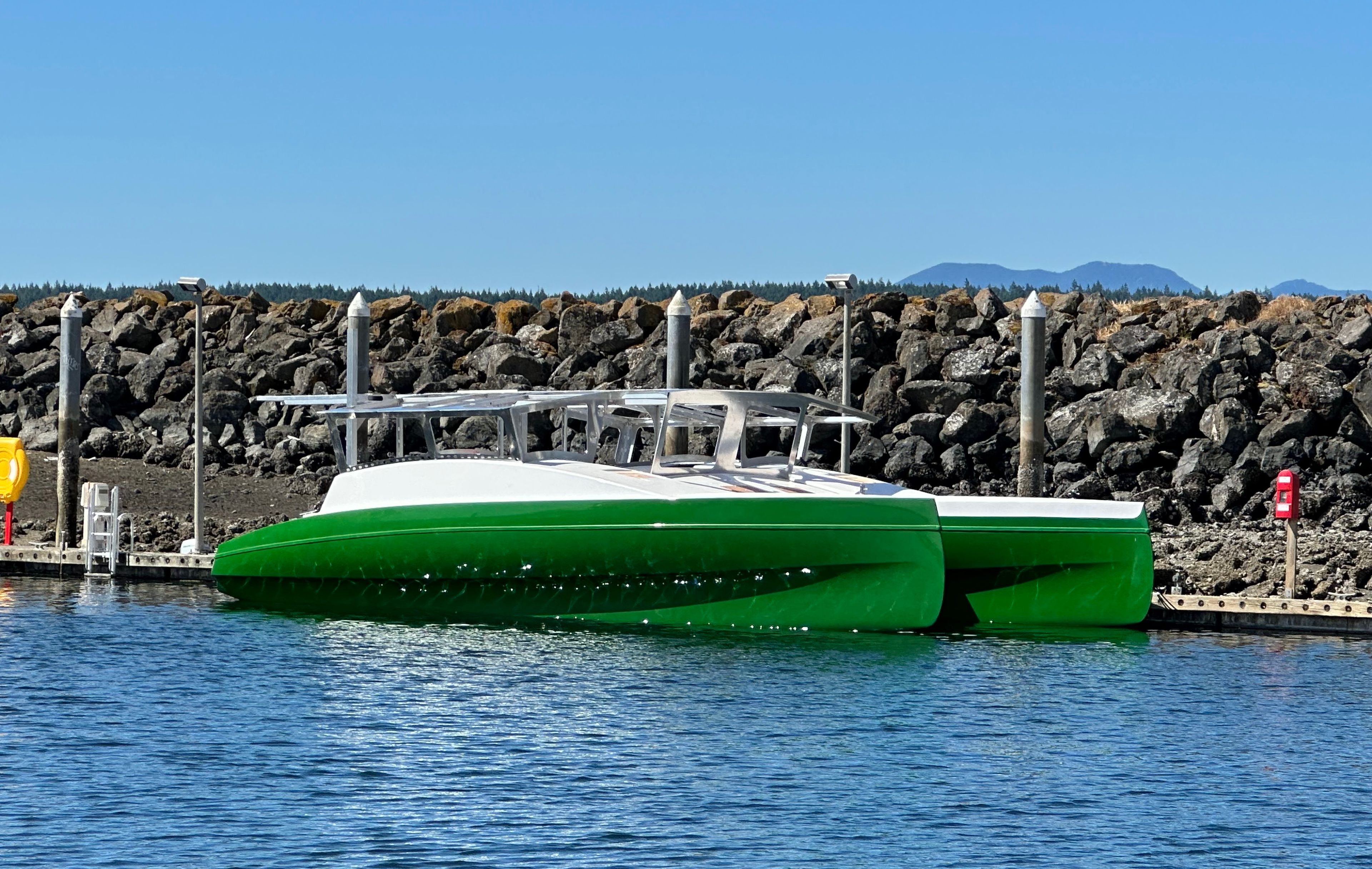
A multihull catamaran form was chosen for Solander 38 in order to maximize surface area for solar panels.
Published

I started thinking seriously about this project in the summer of 2023. I knew the first step would be to identify a hull design, preferably one that was already in production and known to perform well. I was targeting a 40’ length, which I felt like I could comfortably singlehand, and I had convinced myself that I wanted a catamaran. I couldn’t have articulated it this way at the time, but fundamentally, the advantage of the catamaran is that it gives you much more independent control over key design parameters like overall length and beam, weight, width of the hulls at the waterplane, and interior volume. In this case, I wanted a very wide beam to maximize solar area while keeping the hulls narrow and shallow where they met the water, and just enough interior volume to house a family of 4 in moderate comfort, neither luxurious nor cramped. It’s much easier to nail all of those at the same time with a catamaran than a monohull, or even (I think) a trimaran.
Some back-of-the-envelope calculations: catamarans max out at a roughly 2:1 length-to-width ratio, which implies a 20’ beam; if it were a perfect rectangle covered entirely with solar, this would mean 800 sq ft, but a more conservative estimate would be to halve that and assume 400 sq ft of solar coverage. At 17.25W per sq ft, that should be about 7000W of panels.
With 7000W of solar, I’d feel most comfortable with a boat that used between 5000W and 10,000W of power while cruising, depending on speed; that should give me several hours of runtime every summer day. Using some rules of thumb from Dave Kerr’s propeller handbook, which in turn implied a target weight of maybe 12,000lbs.
Maine Cat 38
I looked at a lot of options, but one stood out: the Maine Cat 38 was the right length, the right beam, the right weight, had fantastic reviews as a sailboat, and had the lightweight, minimalist aesthetic I was after without being a “cut your toothbrush handle in half” racing boat. Only about a dozen had been made, so there wasn’t a used market. But would they be willing to make me some bare hulls to build on?
I reached Dick Vermeulen, the Maine Cat owner and designer, by phone. The bad news was that he had retired and closed up shop. The good news: he had sold the molds for the MC 38 to a gentleman in Springfield, Ohio, and he could put us in touch.
That’s how I ended up dropping in on Jim Oren of Gulf Shore Catamaran, and his partner Mike Nagra at JMS Composites. Both had backgrounds in automotive production but were serious about moving into boats. Their facilities looked great (including a brand-new assembly shed, which, as I recall, Jim had to clear off part of his corn field to make room for).
Jim was about halfway through the layup of his personal MC38, which let me get a great sense of both the boat and the workmanship. He also had a wealth of CAD files and drawings from Dick’s shop, which would be critical to planning the modifications I wanted. I was sold.
Another detail that turned out to be invaluable: he had a working relationship with Al Horsmon, the composites expert who had acted as Naval Architect in the original MC38 design. Al’s involvement gave us the confidence to plan the necessary structural design changes to turn this sailboat into a solar-powered powercat.
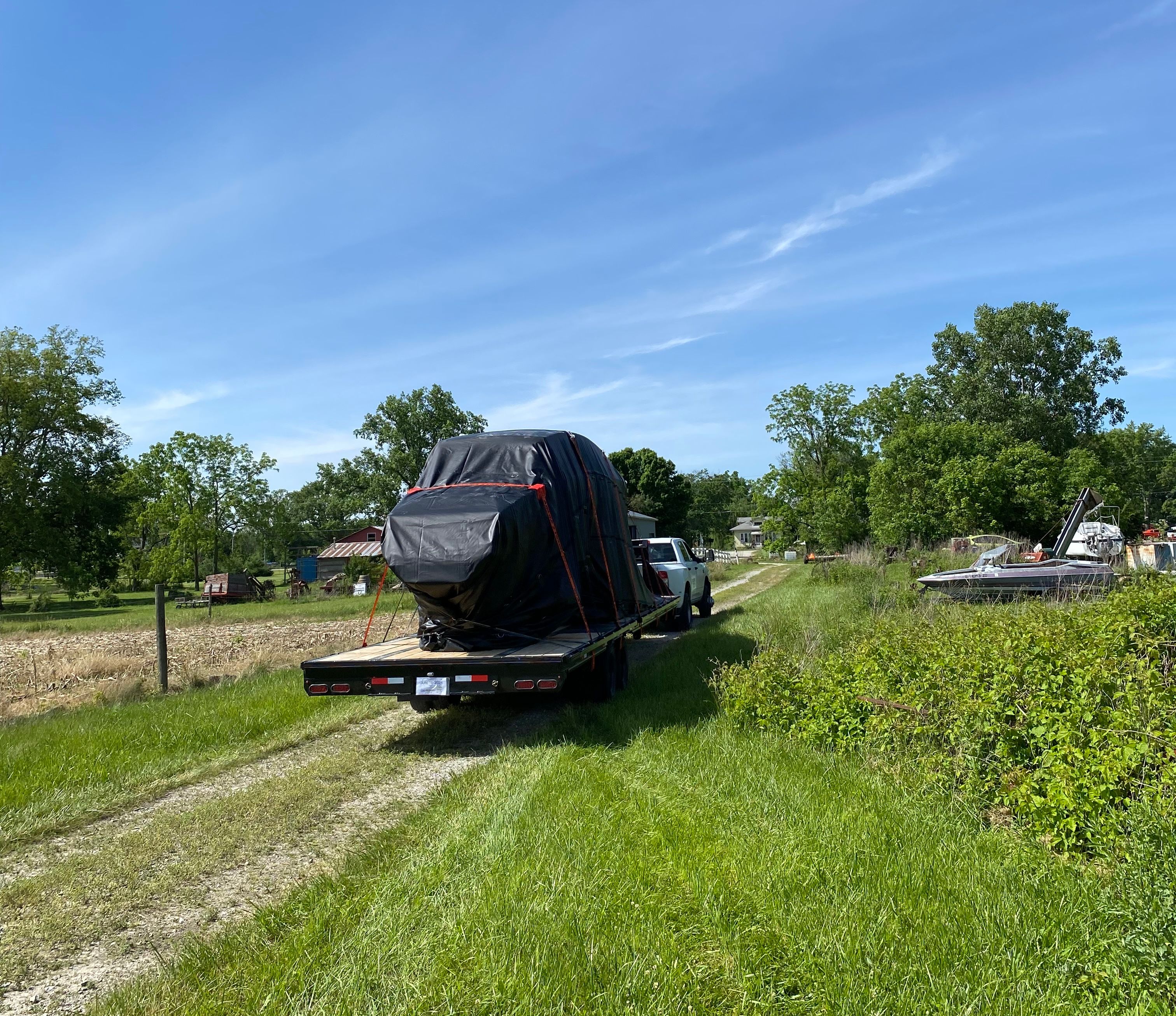
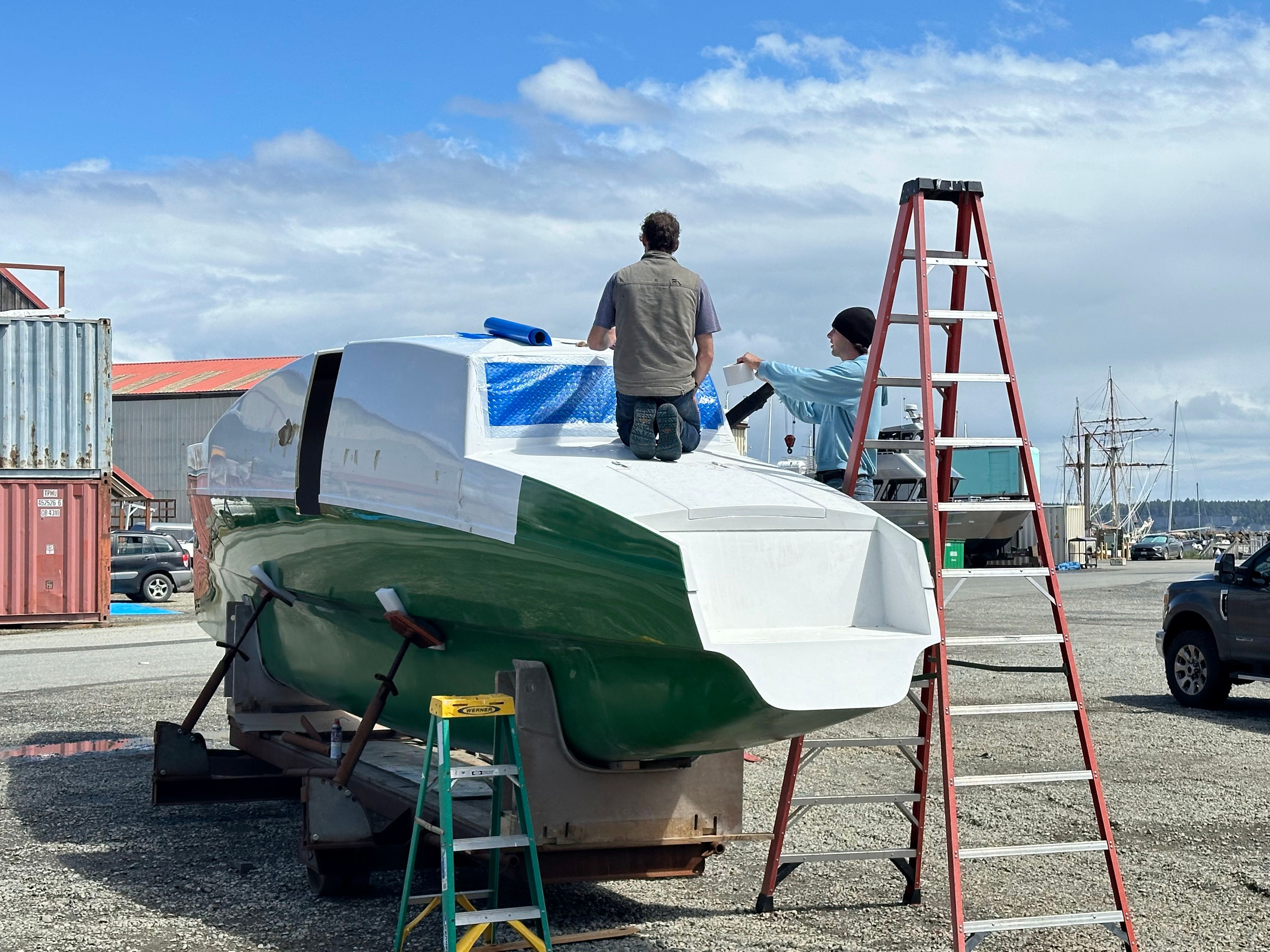
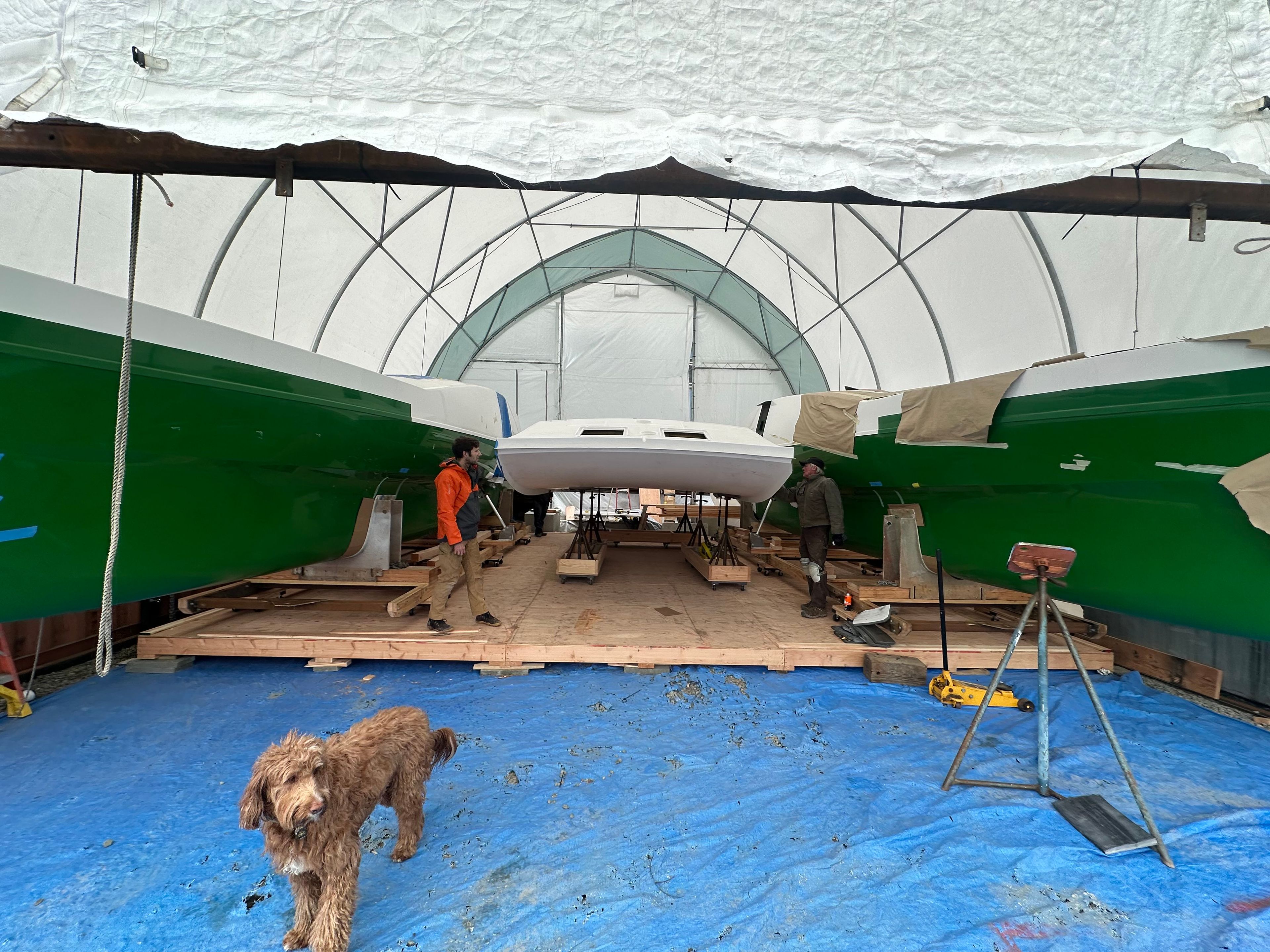
We did have one problem: how were we going to get a 21’ wide catamaran from Ohio to the Pacific? Luckily, it turned out that the MC38 was designed to be built in three sections: starboard hull, port hull, and the flat cross-deck that joined them. Each of them could individually fit on a 40’ flatbed truck. We developed a plan for Jim to ship each part west as he completed it, to be assembled (we originally thought) at the Canoe Cove yard near me in Sidney, BC.
Materials
Composite Sandwich
Closed-cell foam core between inner and outer fiberglass laminate.
Fiberglass
Lightweight, strong, and moldable.